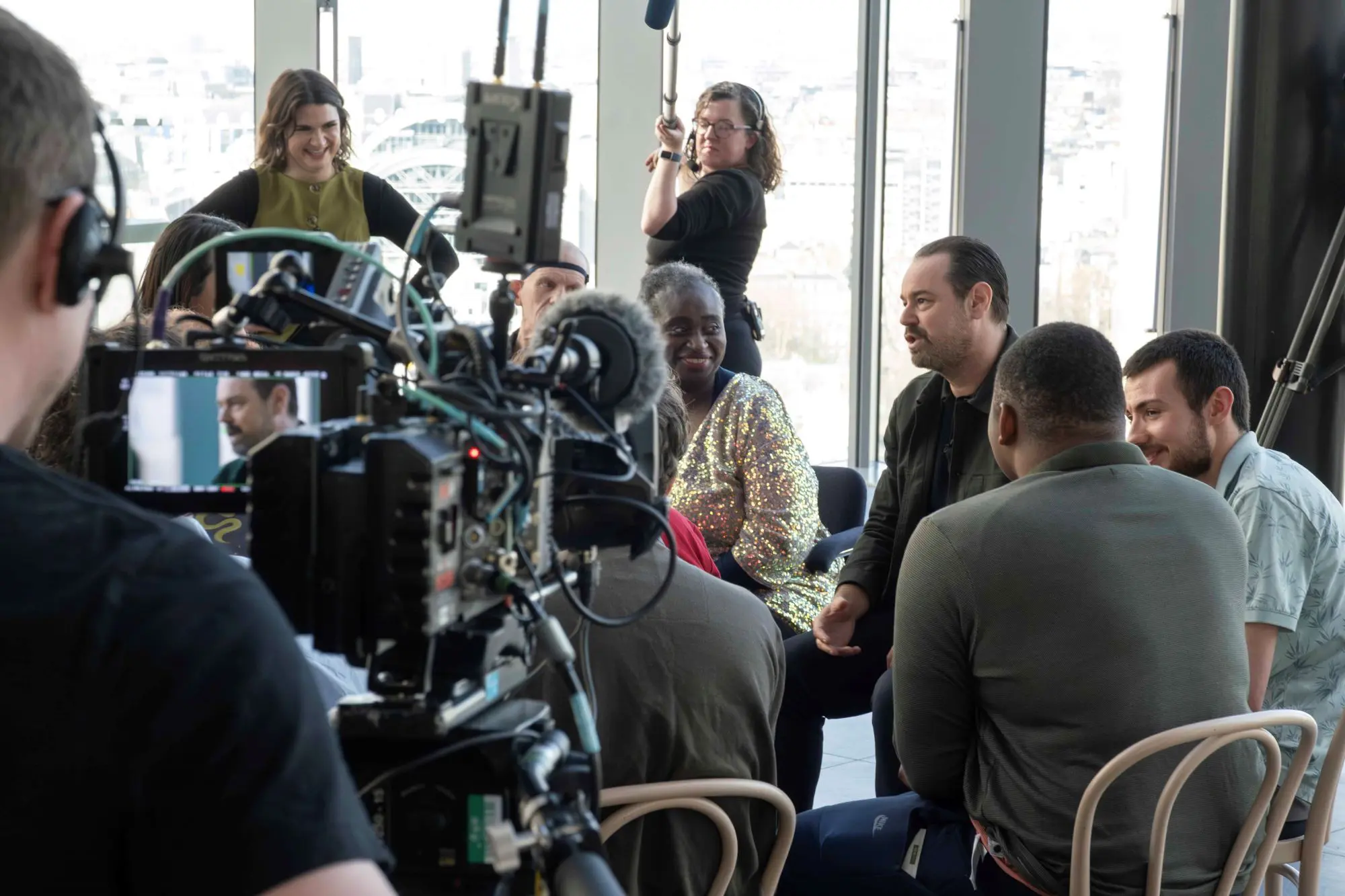
Filmmakers reflecting on filmmaking

Posted: 5 Apr 2013

Being a writer, director and producer involves wearing multiple hats and using a range of skills across the production process. We’ve spoken to filmmakers including J.J. Abrams and Ron Howard, who have experience writing, directing and producing – often at the same time. Find out how what their role involves on set, how they balance their responsibilities, and the skills they recommend budding filmmakers develop…

J.J. ABRAMS ON BALANCING MULTIPLE ROLES

Whether it’s major film franchises like Star Trek and Star Wars or TV drama series Alias and Lost, “the characters are at the centre” of J.J Abrams’ work. He shares that for him, “that balance of the intimacy with the spectacle” is the most important thing to get right.

Abrams’ career has involved different skills including writing, directing and producing but does he have a favourite role? He reveals: “directing is my favourite because it means that the writing is done and that the producer has done whatever needs to get done to actually get to the place where you’re filming something, but they’re all critically important roles.” Because of his multi-faceted experience, Abrams sometimes approaches directing with business in mind. He recalls when filming Super 8, “part of me wanted to just keep shooting these scenes and part of me was like ‘must leave location so we can be responsible’… being responsible on movies is something that’s always been very important to me.”

The best piece of advice Abrams recalls is his father telling him “it’s more important that you go off and learn what to make movies about then how to make movies” as he headed to film school.” Since then, he’s learnt a lot about making films and his own key piece of advice to emerging filmmakers is to remember “your voice is important as anyone else’s.” He also suggests making the most of modern camera technology readily available to “make your movie.” He explains, he knew lots of “people who talk about what they would do ‘if’, but they’re not actually doing the thing.” He says, if you give it a go you’re halfway there as “most people talk about writing screenplays but don’t actually write them. The people who actually write them, you’re in the top 10% because you’ve actually written it.”

HARMONY KORINE ON BEING BOLD AND ORIGINAL

Writer and director Harmony Korine was inspired to become a filmmaker by “watching movies as a kid and then wanting to make films.” He also drew inspiration from his documentarian father, who he “used to just follow around as a kid to carnivals and circus [as] he would make films about strange characters.” Learning about “formatting, three act structures,” at writing school began his journey, but he credits most of his education in filmmaking as coming “from other movies, watching other films for pacing and other things that I would pick up on from watching Buster Keaton movies.”

But, unlike some other writers, Korine doesn’t start with a complete story arc. He shares: “I don’t have the end result in my mind when I start, I’m trying to search for it, trying to make it up as I go and react to something,” showing there’s no one set way to write a screenplay.

The creative mind behind films Gummo and Spring Breakers, Korine advises emerging writers and directors to draw on varied experiences. He says its important to develop an “understanding [of] what it’s like to live outside common realm, you know what I mean? Know what it’s like to experience extreme highs and lows.” He also emphasises the importance of being original, saying “be bold, try to invent your own reality and try to do what’s not been done before.”

RON HOWARD ON LEARNING THROUGH ACTING

Director Ron Howard “started off as a child actor” where he “realised that a lot of the people directing me in television had been actors.” Because “actors are always at the centre of the problem solving of working a scene out,” Howard believes it can be a “really great training ground” for budding directors. “I even suggest to people who have no interest whatsoever in acting but want to be directors, or writers, producers, to take some acting classes. To be in some plays, understand what it is to be vulnerable, be out there and be part of telling a story, communicating it to an audience.”

As a director, Howard’s work has spanned multiple genres, because it was important to him to “be adventurous as I could be and not get labelled.” He shares that directors can all be very different in personality and style, but are united in having “taste and judgement.” He says: “That’s what it’s all about. It’s understanding what exists within the possibilities of the story you’re interested in telling… it doesn’t much matter how you get there, whether there’s a large crew or a small crew, whether it takes a long time or just a little while. What really matters is what did you get? And what does it mean to other people when you edit it together and share it?”

And his top piece of creative advice to aspiring directors? Analyse a film scene you love. He suggests: “Whatever the genre, if there’s a movie you particularly like and there are sequences you remember and you think are cool, watch them over and over again. Watch them a couple of times with sound and then watch them a couple of times without sound. Because you pull the sound out… [you] begin to see really how the filmmakers capture the image.” He adds,”[when you] start breaking down [a film scene] and understand what was done on the day to create the sequence of shots that we love, that has an impact on us, it’s like a light goes on. It simplifies everything and removes a lot of the mystery.”

WIM WENDERS ON THE WEIGHT OF EXPECTATION

BAFTA-winning filmmaker Wim Wenders has directed a vast range of films from neo-Western drama Paris, Texas to documentary Buena Vista Social Club. However, he shares that success as a director can come with difficult expectations to manage. Looking back on the toughest moment in his career, he says: “Believe it or not, it was my moment of greatest glory, at least until then. It was the Palme D’Or in Cannes.” He describes himself as “happy as a clam” until he “realised everybody had an expectation from now on”, admitting this feeling was “very tough to overcome.”

Thinking about skills that are important for directors to learn, Wenders stresses the importance of learning about marketing. Although not a role commonly associated with directing, Wenders feels “you have to be knowledgeable in marketing” and believes it is a shame that “a lot of great directors are not good at all at selling what they’ve done.” He also adds that the role of the director should continue once the camera stops rolling to ensure the film’s poster and marketing matches a director’s vision.

Wenders further shares that it’s easier than ever to get started as a filmmaker because the technology is at our fingertips. He says “with a digital camera and a computer you have the basic tools and you can do it.” However, he admits with this access comes challenges because “on one hand it’s become a very democratic medium and on the other hand it’s become very tough because if everyone can do it, why should you do it?” But he stresses the key to success is making sure your film is unique to your own interests and skills: “that’s for me the most important thing a young filmmaker has to understand. If you make a film, you must be sure no one else can do it.”

DAVID O. RUSSELL ON CREATING BELIEVABLE CHARACTERS

For David O. Russell, “finding the extraordinary in the ordinary” is vital to his work. His characters are at the heart of his filmmaking and, as he says: “the cinema that I make is based on characters that I love and specific worlds that they live in that I love. And that includes every minute detail of their lives; their music, their food, the way they talk, the way they walk.” As such, his first step when planning a film is breaking down characters in detail to understand “what is specific about them”, in order to make them feel authentic. But he advises, that while characters should be funny, this shouldn’t feel forced: “If it’s funny, it’s going to happen because it’s just real and honest.”

His technique for starting to write a screenplay is “to write the script for each of those roles from the heart and write it and rewrite it and rewrite it and to tell it to people.” He will read the script aloud with actors, producers and friends, and “every time I tell it, I often record it and I find something new.” He then begins to think about how it will be filmed, “with meticulous planning of the way I want the film to look.” He also shares on his film set, “everything is meticulously choreographed and practiced and rehearsed,” to ensure he makes the most out of his budget and filming window.

On a film set, the director works closely with their first assistant director (AD), and a great working relationship can be key. Russell reflects on the partnership, saying: “Shelley Ziegler has been my AD on four films and she is a complete lieutenant general who is one part of my heartbeat and she makes the impossible possible and thinks four steps ahead.” As a filmmaker, it’s important to have a team you can trust and who believe in your vision.