In conversation… 2025’s BAFTA Breakthroughs UK reflect

Posted: 2 Jun 2026

There has long been a history of BAFTA showcasing and helping accelerate the careers of the next generation of film, games and TV talent. And every year it’s exciting to welcome talented creatives onto our flagship Breakthrough UK programme, supported by Netflix, and give you the chance to get to know them better.

As we near the end of the 2025 cohort’s year we gathered some of their thoughts on the programme, the importance of collaboration and the future of the industry.

Akinola Davies Jr (director, My Father’s Shadow), Marie Elena Dyche (producer, Harvest) Nathaniel Price (writer and associate producer, Mr Loverman), and Pinny Grylls (director Grand Theft Hamlet) spoke to us…

On being a Breakthrough

Akinola Davies Jr

For loads of people, it might be their first introduction to us. But for the community of people we’ve been working with, they’ve known us for over a decade… my mum knows what BAFTA is; she might not know some of the other things I have done. Maybe it puts you in more of a national conversation.

Marie-Elena Dych

I did the NFTS producing course 10 years ago… it’s been a 15-year endeavour of trying to break in. But it really is so lovely to have that recognition, especially because BAFTA is such a wonderful organisation. It’s a real stamp of approval.

Pinny Grylls

It’s a funny thing saying you’ve broken through. I’m in my 40s, so there’s been moments in my life where I thought I’ve broken through. But maybe I really have now.

Nathaniel Price

It’s such a huge honour to be recognised by such a prestigious initiative as BAFTA Breakthrough. To follow in the footsteps of the incredible creatives who have come before, and to have the opportunity to connect with, learn from, and share experiences with this year’s cohort, has been a real privilege.

On collaboration

Marie-Elena Dyche

In terms of collaborating, for me the interest is in storytelling. That’s where I go into each project. I always try to look at it from a human perspective. Can I find a connection with someone? And the story. Does the story touch me? And that can happen as a producer, across any kind of theme or any kind of genre…

Whoever we choose to collaborate with in this industry, everyone is coming at a particular point in their lives, with all of the experience that they’ve gone through. We create something which is so particular to that moment of time, and then once it’s created it lasts as this precious moment that will exist until way after we’re gone.

Pinny Grylls

I get really bored if I stay with people who only know stuff that I know. I’m doing an immersive theatre piece, which is Macbeth in Call of Duty. It’s kind of like a gaming- theatre mash-up, but in the real space. And I’m now writing a script called Signs of Life. It’s a rom-com about a failed comedian who loses her hearing, and then falls in love with a deaf man who teaches her sign language. So those are the two big things I’m doing this year. And both of them are a result of entering new worlds that I didn’t know anything about before.

Nathaniel Price

Writing can often be a solitary experience, so it’s always rewarding to collaborate with such a talented range of people – from producers and directors to casting executives and beyond. There’s something incredibly special about watching all those disciplines come together to bring to life something that began as words on a page, written alone in your pyjamas while eating ice cream.

Akinola Davies Jr

I think there’s something really interesting about collaborating with people who see what you do a little bit differently. It can help you extract something. The editor of My Father’s Shadow [Omar Guzman Castro] is a Mexican editor. He’d never edited an English- language film before, and my film is maybe 50% in English. But it’s all about rhythm and instinct and an understanding of the story being told.

On industry changes

Nathaniel Price

I’ve been reading recently about the rise of vertical storytelling and how it reflects changing viewing habits. It’s an exciting space that opens the door for a wider range of voices and stories, particularly from creatives who may not have had access to traditional pathways. That said, I still believe, and hope, that film and television will remain vital because storytelling is, at its core, a shared human experience. I’d love to see traditional platforms continue to be bold: championing projects that not only entertain, but also challenge societal norms, interrogate stereotypes, and offer diverse, original perspectives.


Marie Elena Dyche

My fear is about the stories that aren’t told – films that never are able to be materialised. It’s getting so much harder to make films. There are all these hoops that you have to jump through. There’s public funded money, which is there if you have x, y and z. But if you don’t meet that criteria, then what do you do? How do you find money in other ways?

Akinola Davies Jr

When there’s disruption new ideas probably resurface. But equally I think it’s always been difficult for people from my community, or similar communities to author our own stories. For so many people, there’s never really an entry point…

I think the fact that things have become difficult is going to make people think a little bit more about the stories – about why they’re telling them, or who they’re telling them with. I believe that things happen on cycles. And hopefully that happens with storytelling and filmmaking; we can return to things that have a lot more heart and a lot more feeling, and a lot more about understanding each other and where we’re from and the difficulties, we face.

Pinny Grylls

I’m optimistic because I think whenever there’s disruption, there’s new things. At the moment it’s very scary for people. There are a lot of people out of work. You can find a creative solution to it, like I did in a crisis when I lost my hearing …

People are very worried about AI filmmaking and how that’s going to break the industry… [but] I’m not worried about it because I listen to myself, and I think “What do I respond to when I’m watching something?” And it is that authenticity, that human storytelling.

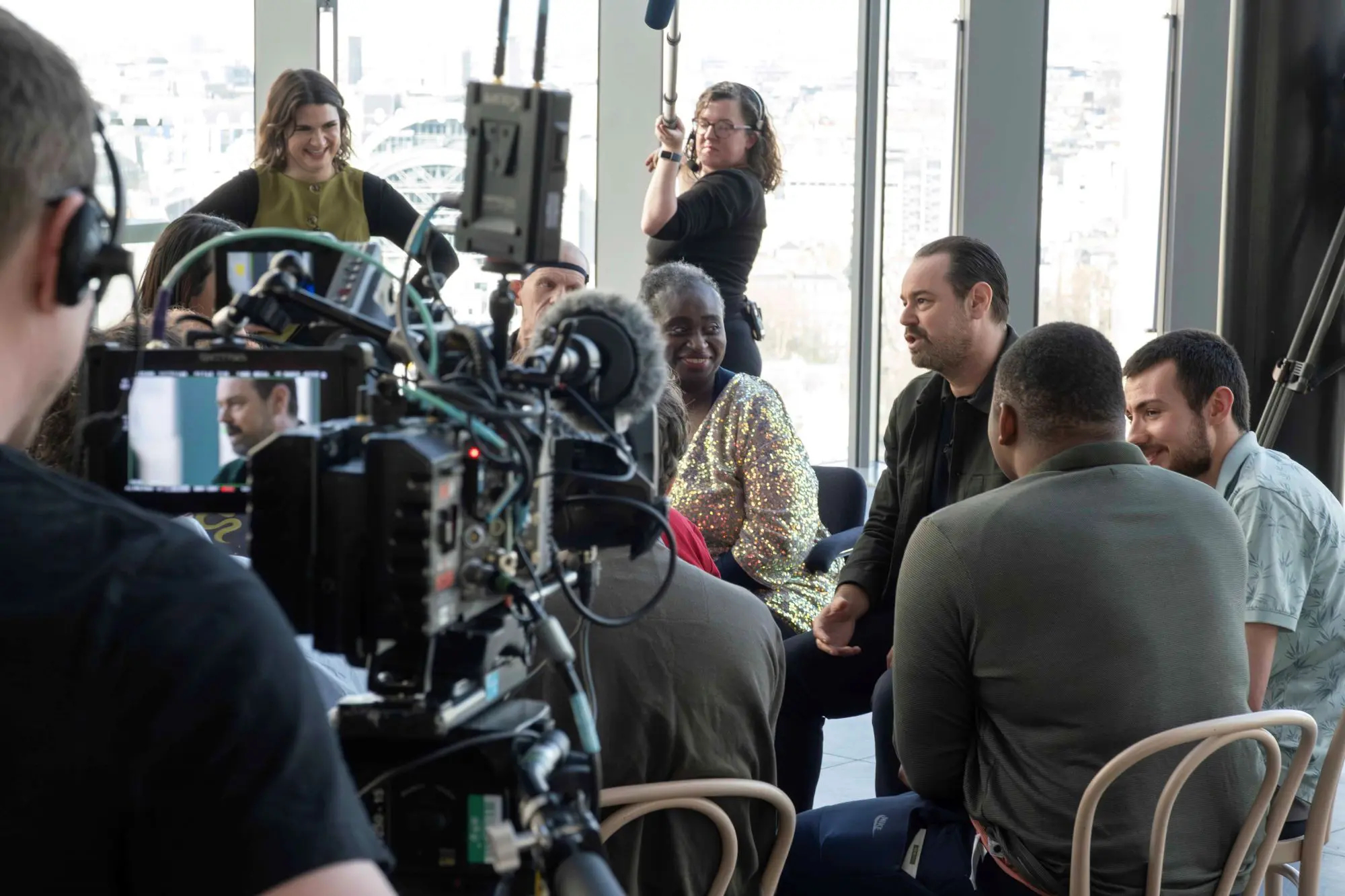
  • Akinola Davies Jr, Marie Elena Dyche, Nathaniel Price, and Pinny Grylls, are all participants in 2025’s BAFTA Breakthrough UK, supported by Netflix. The initiative showcases and supports the next generation of creatives in film, games and TV, helping leverage early success into sustainable careers. Applications for the 2026 BAFTA Breakthrough UK cohort are now open, take a look at our programme page to find out how to apply or to recommend someone.