NOTICE: This page is available to view in Cymraeg

Creating music that brings stories to life

Posted: 4 Jun 2026

There are so many components that go into bringing a story to life on screen. A vital one – no matter whether the project is film, games or TV – is music. The choice of a single song can bring heart and feeling into a scene, while a full score can underpin the conveying of vast emotions without the utterance of a single word.

The impact music has on bringing stories to life is so powerful that it made the perfect discussion topic at BAFTA Cymru’s 2026 Guru Live event. Here we share what North Wales based media composer and performer Yasmine Latkowski, and South Wales music supervisor Skip Curtis, had to say. They talk about breaking into the industry, the unexpected places a career in music on screen can take you and challenging AI with authenticity…

Breaking into the industry

So how do you get started? According to our experts it’s all about getting yourself out there and getting to know the people making the decisions.

Latkowski says: “Nine times out of ten [a broadcaster] they’ll put composers forward but a director will have someone in mind… If you’re looking to get into film and TV get to know directors.”

With this in mind the composer’s top tip for finding opportunities is to get networking. She says: “Networking would be the top way of going about this for me. You can look for credited production companies. Research as well- if it’s particularly production music [that you’re doing], it’s good to look at production companies’ catalogues and see what they might be missing and email them and say do you want any of this. That can be one way.”

Curtis echoes this saying it’s “massively a numbers game”. He adds “You can network and can send your stuff to however many people. Some people will reply and some people won’t reply, but they’ll know it’s there and they’ll know when to call on you. It’s so competitive…

“It’s just being visible and continually checking in. I do it now all the time with brands, with directors… I’ll email them and I won’t hear anything, then I’ll email again in two months. When the time is right, someone will say ‘oh actually, I’m in need of…'”

Unexpected places music can take you

If you are serious about a career in music on screen then be prepared for the unexpected.

Latkowski recalls how on one occasion a composition she originally thought would end up on one show ended up on a very different one. She shares: “I did a Celtic bagpipe album that we thought was going to go to places for Countryfile – that’s what it was meant for – and it ended up on Love Island!”

Adding that she was particularly surprised as: “It was a Welsh folk track, and it was written in Welsh, and I was like ‘who’s chosen this for Love Island’.”

And Curtis, who balances being a music supervisor with songwriting and record producing, found his music was picked up by someone on the other side of the globe. He says: “My old band was used in the Sims, which was cool! It’s EA games so they’re based in Vancouver.”

These kinds of opportunities can unexpectedly arise with all manner of jobs that work with music on screen too Curtis adds. Saying: “Trying to get jobs as a music supervisor- I’ve had thousands of unanswered emails. But somewhere you might get an opportunity and then if you’re good, you’ll work on that- but it’s amazing where your music will go.”

Challenging AI with authenticity

AI has impacted the landscape for composers and musicians much as it has for everyone else working today. But Curtis and Latkowski are confident that the authenticity of human created content still has a vital role to play.

Curtis remains positive about the position of human created music vs AI in light of his own experiences. He shares how he worked on the recent Pepsi Christmas advert, which was totally anti-AI in reaction to Coca-Cola’s computer-generated version. He says: “Pepsi said ‘we’re going to make the real version of it’ and they went out and filmed it all in the Czech Republic I think. So they said ‘we can’t use any AI, because our whole stance is around anti-AI’…

“So, from a brand point of view, top-tier brands are saying ‘we don’t want to touch it’ because they can afford not to. Lower tier challenger brands are sort of saying the same thing, saying they’re more about the audience. It’s the middle tier [that is impacted] by AI because it’s cost cutting.”

But he adds: “AI is obviously here and it’s coming in. As far as TV commissions go, I think they’re going to be quite resistant to it from a music point of view… But AI is a huge factor.”

Latkowski, who frequently works with session players and session singers, says her approach has “always tried to keep things live and authentic” as opposed to using samples. She shares: “Especially if I’m writing Arabic music, because there are a lot of samples of ‘generic Arabic music’, so I try not to do that [use AI] anyway just because I want to keep that unique selling point. So, I’ve always had that issue of some companies turning it down because I need money, obviously, to pay the session players…

“Maybe it’s a bit naïve, but I’m not too worried about it because of the way that I work. And what I’ll do now is just try to continue that and try to write as much music as possible with live players on it, because that shelf life is a bit longer, as opposed to music with samples.”

What is BAFTA Guru Live Cymru?

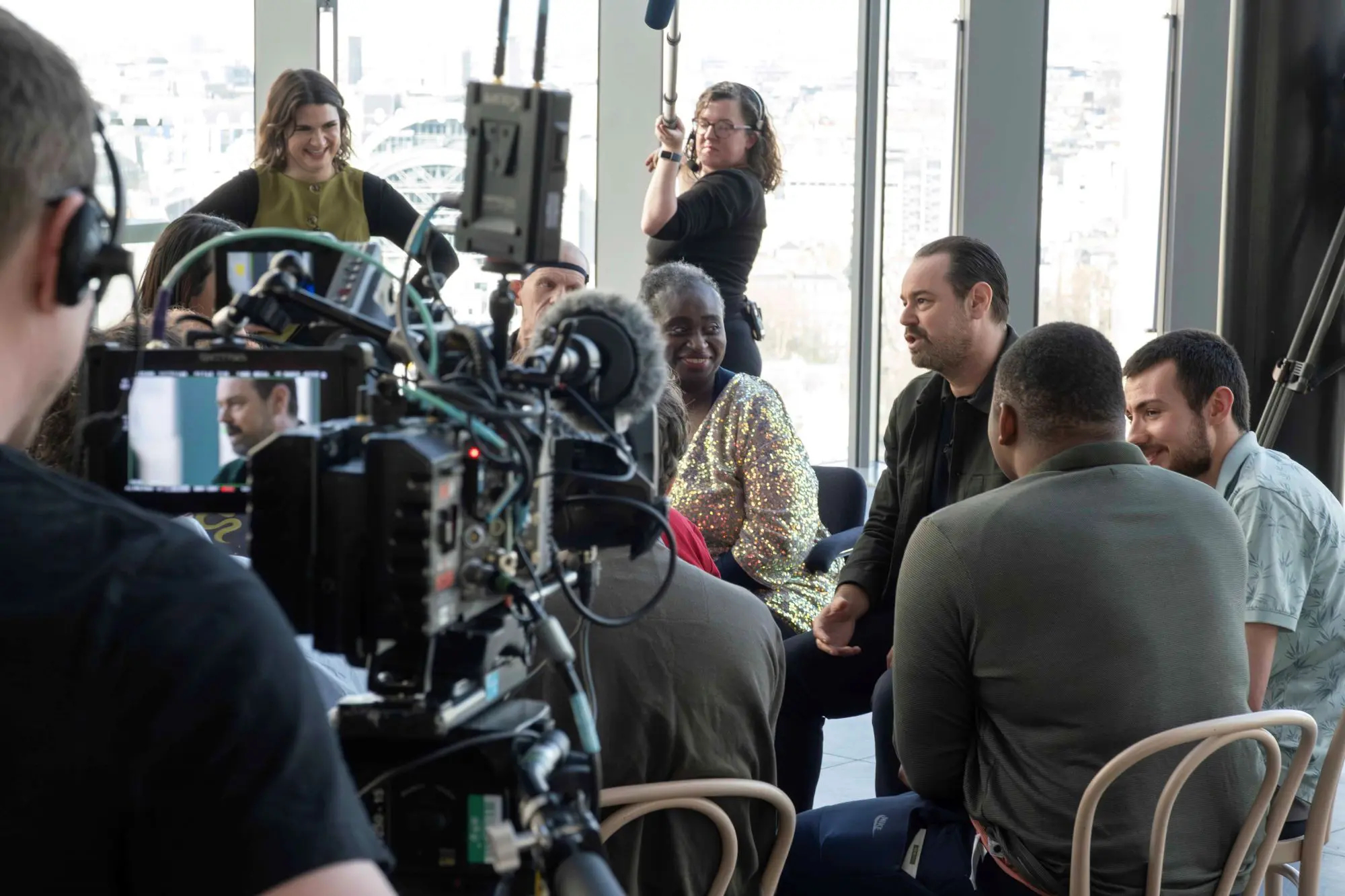
BAFTA Guru Live Cymru is part of BAFTA Cymru’s programme of initiatives aimed at shining a light on career pathways and opportunities in Wales. It brings together an inspiring mix of talent and organisations to inspire and support aspiring talent across the nation. The session that Yasmine Latkowski and Skip Curtis were speaking at was supported by Creative Wales.