Hugo Blick: Television Masterclass

Posted: 19 Dec 2012

As a writer, director and producer, Hugo Blick has a wealth of experience across different areas of the screen industry. He’s best known as the creative mastermind behind The Shadow Line, for which he won a TV craft award for his direction. He joined us at BAFTA HQ for a special masterclass to share his research process, creating a series with a distinct genre and how to make both actors and audiences feel invested in your story.

PRODUCING A NOIR THRILLER

Research is important to developing the plot of a TV series or film, but Blick also shares it was useful for establishing genre in The Shadow Line. He says: “In order to create something that feels authentic to its genre, you do need to look back extensively at how that looked and felt.” To create his noir thriller, his research covered a wide time period. “Of course you start with noir in its essence in the ‘30s, but I was particularly interested in the post-Nixon, pre-Reagan period of the ‘70s American thriller moviemaking.”

For Blick, it was important to add his own influence while paying homage to the drama to make it feel authentic though. He says: “If you’re looking to be knowledgably distinct, I think it will look fake. So to me, [The Shadow Line] just looked right for the story I wanted to tell and that distinction was because I was coming at a genre from my angle.”

A DREADFUL EXPERIENCE

While a TV drama, The Shadow Line has a cinematic look, which Blick says “was all to do with the creation of dread.” Blick believes the feeling of “dread” drives audiences to watch a TV programme, explaining: “Why an audience is compelled to join you on a journey is that they are presented with the opportunity that down at the tunnel of the storytelling, right at the end of it there is this dreadful dread waiting and we go on it to see it because it’s delicious to find out what it is.” However, this impending sense of dread is affected by audience’s attachment to the series’ characters. He says: “as we take that journey with the characters, hopefully the audience will invest themselves in the characters. So, by the time the dread comes close, the investment in the character is so considerable that you kind of don’t want to see the dread because of the risk the characters will have to face up to, but of course you do. This lovely duality is what makes you take the journey.”

Blick also shares how to heighten impending dread in a series using filming techniques. He says: “To make people feel dread, you have to put darkness into the frame.” Through darkness, “in terms of story there’s so much obfuscation and disguise, but also just physically it’s kind of frightening, especially if you make them look in the wrong place.”
WORKING WITH ACTORS

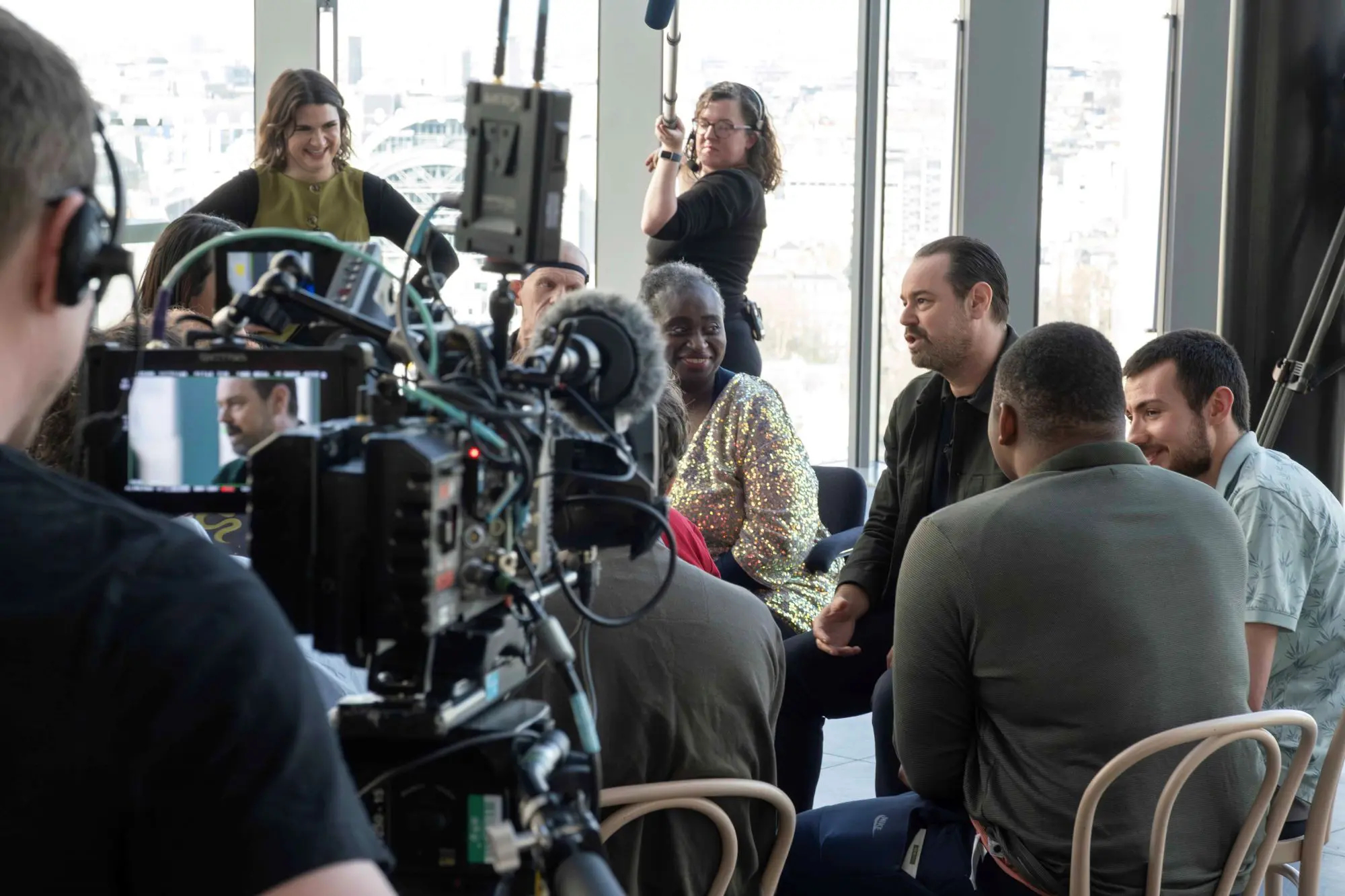
As well as being a writer, director and producer, Blick has also dabbled in acting, and values a close relationship between actors and creatives. He encourages creatives to get actors involved in storytelling: “The actor needs to feel they’re on a journey of discovery with you. That there’s an argument in this piece that needs resolving and that the actor in their character [is] advancing the argument towards a resolution.” He believes that it’s important for actors to feel “completely invested in not just the dialogue they’re saying but in the story they’re telling so they know how they contribute to the whole.”

Blick considers filming a very collaborative process between actors and the production team. He says: “How I see it I guess is that we midwife the story. The story is the baby and we’re the midwives, both actor and director and we birth the baby by being the story.” He also shares he is very open to actors reinterpreting his script and bringing ideas, so that they can work together to produce the best work possible. He remembers when he “did a piece with Rhys Ifans and he reduced three pages to a look… he said ‘that’s it isn’t it’ and I went ‘yeah, it’s about ten days work for me but you’ve done in a look’. It was perfect, so that was what we kept.”

For more inspiring masterclasses from the worlds of film, games and TV, check out our resource section.