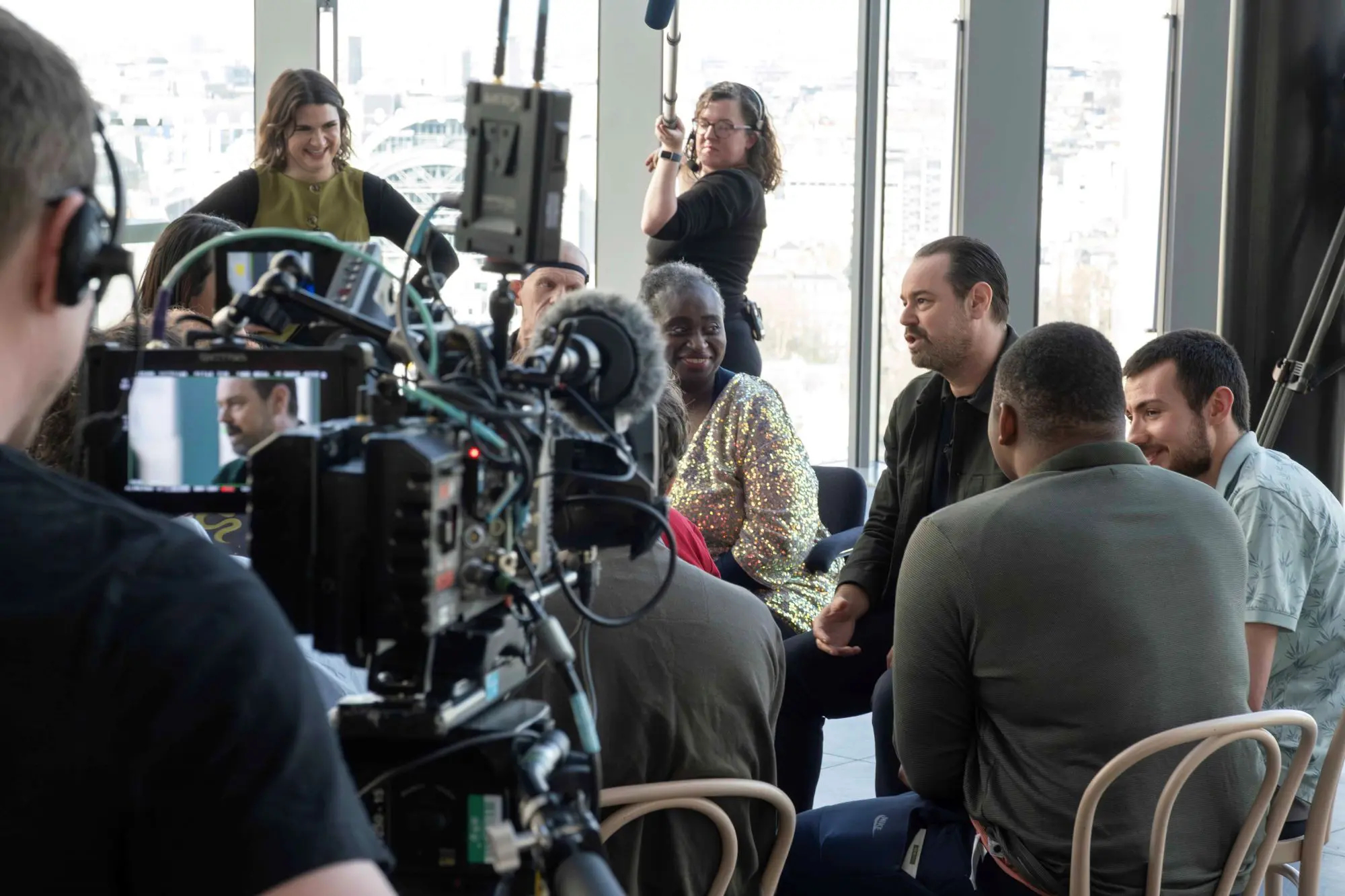

Images available here
BAFTA has today set out an annual update on the make-up of its membership – a global academy of professionals working in film, games and television.
BAFTA’s international membership of 14,000 professionals spans dozens of creative disciplines across film, games and television, with branches in London, Cardiff, Glasgow and Los Angeles.
In 2020, BAFTA set itself membership diversity targets in line with the ONS census, UK broadcasters and other screen industry organisations, with the double aim of ensuring its membership is diverse, inclusive and representative of society, and highlighting areas of under-representation within the screen industries.
As of 2025, BAFTA has achieved its membership target of 20% minority ethnic groups (actual 19.85%); 12% Deaf, Disabled & Neurodivergent (actual 12.84%) and 10% LGB+(actual 13.29%).*
Currently, 43% of BAFTA members identify as women (target 50%); however, 51% of new members joining since 2020 identify as women.
A socio-economic background target was not set in 2020, BAFTA introduced this question – as determined by the Social Mobility Commission – and began reporting on it in 2023. Currently, 19% of members are from working class backgrounds, with 21% of all new members joining since 2020 identifying in this group.
Following on from these initial five-year targets, BAFTA is recommitting to continue to monitor and publish the diversity of its global membership annually.
From 2026 onwards, BAFTA will stay in line or ahead of its membership diversity targets based on the general population (Census 2021), with a focus on equity and inclusion in the screen industries.
In addition, BAFTA will: increase its target for Deaf, Disabled and Neurodivergent to 18% by 2030 (based on the UK working age population 2024); look in more depth at the representation of People of Colour in senior industry leader roles; continue to strive for gender parity, with a particular focus on increasing women in the games sector and in craft roles where current representation is lower than 40%; and continue its efforts to promote careers in the screen industries to those from working class backgrounds, with a target of 25% new members from low socio-economic backgrounds by 2030 (currently 21%).
Sara Putt, Chair of BAFTA, said: “Talent exists in every community, and our industry thrives when we create pathways that allow all the stories and perspectives that shape our culture to be seen and celebrated. I’m proud of the progress BAFTA has made in growing a diverse membership that reflects the breadth of talent and experiences of those working in film, games and television today. There are areas where systemic challenges continue to limit opportunity, and we must continue to push industry benchmarks where representation lags behind the UK working age population – for example, the number of disabled people in our industries and the number of those from working class backgrounds. We will use our membership data to highlight and explore in more depth areas where underrepresentation persists, for example, women in games and craft roles, and people of colour in senior industry leader roles. Through BAFTA’s talent development programmes and bursaries, we will continue to provide access to support and professional networks, in order that talented people from all backgrounds have the opportunity to enrich our industry and culture with their stories and skills.”
Andrew Miller MBE, BAFTA Board Trustee and Disability Advisory Group member, said: “Inclusion doesn’t just happen, it takes effort, energy and commitment. So I am immensely proud of BAFTA’s determination to shift the dial around disability. With nearly 13% of our membership now declaring disability and an ambitious stretch target in place for 2030, BAFTA is offering an industry lead in how to deliver real change when it comes to representation of disabled people.”
In total 10,000 BAFTA members vote in the annual BAFTA Awards recognising outstanding achievements and storytelling in film, games and television.
For the 2025/26 Awards season, there are:
- 8,300 Film Awards voters
- 1,700 Games Awards voters
- 6,000 TV Awards voters
- 782 new full members have joined BAFTA this year
- BAFTA’s Games membership has seen the biggest increase YOY (27%) with over 350 new Games members joining in 2025
BAFTA Connect, a membership tier founded in 2022 for emerging and mid-level creatives, currently stands at 2,300 (non-voting members).
BAFTA uses membership diversity data to inform its year-round talent development programmes – such as BAFTA Breakthrough and Elevate – which aim to level the playing field for talented individuals from under-represented groups by providing access to knowledge and industry networks to aid career progression.
BAFTA’s bursary and scholarship programmes, as well as its Young BAFTA national school roadshows and competitions, specifically aim to remove barriers to accessing careers in the screen arts – this year BAFTA awarded over £277,000 in grants to 86 people, and travelled to schools across the UK.
BAFTA’s 2026 Awards season is underway. The 2026 BAFTA Games Awards Longlists will be announced on 9 December.
Voting opens for the 2026 EE BAFTA Film Awards on 5 December, with the Longlists announced on 9 January in advance of the nominations’ announcement on 27 January.
Next year’s Awards ceremonies will take place on:
- EE BAFTA Film Awards on 22 February 2026
- BAFTA Games Awards on 17 April 2026
- BAFTA Television Craft Awards on 26 April 2026
- BAFTA Television Awards with P&O Cruises on 10 May 2026
Notes to Editors:
BAFTA membership diversity targets set as part of the 2020 BAFTA Review can be found here.
Progress against diversity targets is reported in BAFTA’s annual review, which can be found here.
*In 2024, all members were required to resubmit their response to the survey for the first time since the launch of the diversity survey in 2020.
The requirement to resubmit responses was prompted by specific changes to survey questions and preferred terms, following industry consultation.
- The Disability Advisory Group recommended moving the binary ONS disability question nearer to the top of the survey and adding a secondary multiple-choice question including a broad range of conditions.
- BAFTA adopted recommendations following The Film and TV Charity round-table report, adding ‘Jewish’ and ‘Arab’ as options under ethnicity alongside the question covering religion. ‘Central European’ and ‘Eastern European’ were added to the broad category of ‘White’ to align with the census.
- In line with published guidance from the Social Mobility Commission, four questions to capture information about socioeconomic background have been added.
- Gender reporting – 57:43 refers to those who identify as Man or Woman – this does not include those who identify as non-binary, intersex, other or prefer not to say. The survey also asks if the individual’s gender identity is the same as the gender they were assigned at birth.
- LGB+ replaces LGBTQAI+ to reflect ONS census reporting.
Response rates are c.90% for the membership overall, with 100% of voting members responding in order to vote in the annual Awards.
BAFTA will be open to applications for membership in February 2026. Every application is individually assessed by BAFTA and industry professionals from BAFTA’s sector committees representing film, games and TV. Details of the criteria and how to apply can be found here.
The Prince William BAFTA Bursary provides grants of up to £2,000 each to help creatives from across Wales, Scotland, England and Northern Ireland cover essential costs, such as driving lessons, specialist training, relocation and equipment, which can otherwise prevent talented people from pursuing careers in the screen industries.
BAFTA press office:
[email protected]
Photography:
Images available here
BAFTA Social:
Follow @BAFTA on Facebook, Instagram, YouTube, TikTok, LinkedIn, and X
Instagram: @BAFTA
Facebook: @BAFTA
TikTok: @BAFTA
X: @BAFTA
YouTube: @BAFTA
LinkedIn: @BAFTA
About BAFTA
BAFTA’s mission as a charity is to champion the creative and cultural importance of the screen arts across film, games and television. Through its Awards ceremonies and year-round programme of talent initiatives and learning events that include masterclasses, lectures, scholarships, bursaries and mentoring schemes in the UK and North America, BAFTA identifies and celebrates excellence, discovers, inspires and nurtures new screen talent, and enables learning and creative collaboration. For more, visit www.bafta.org. BAFTA is a registered charity (no. 216726).